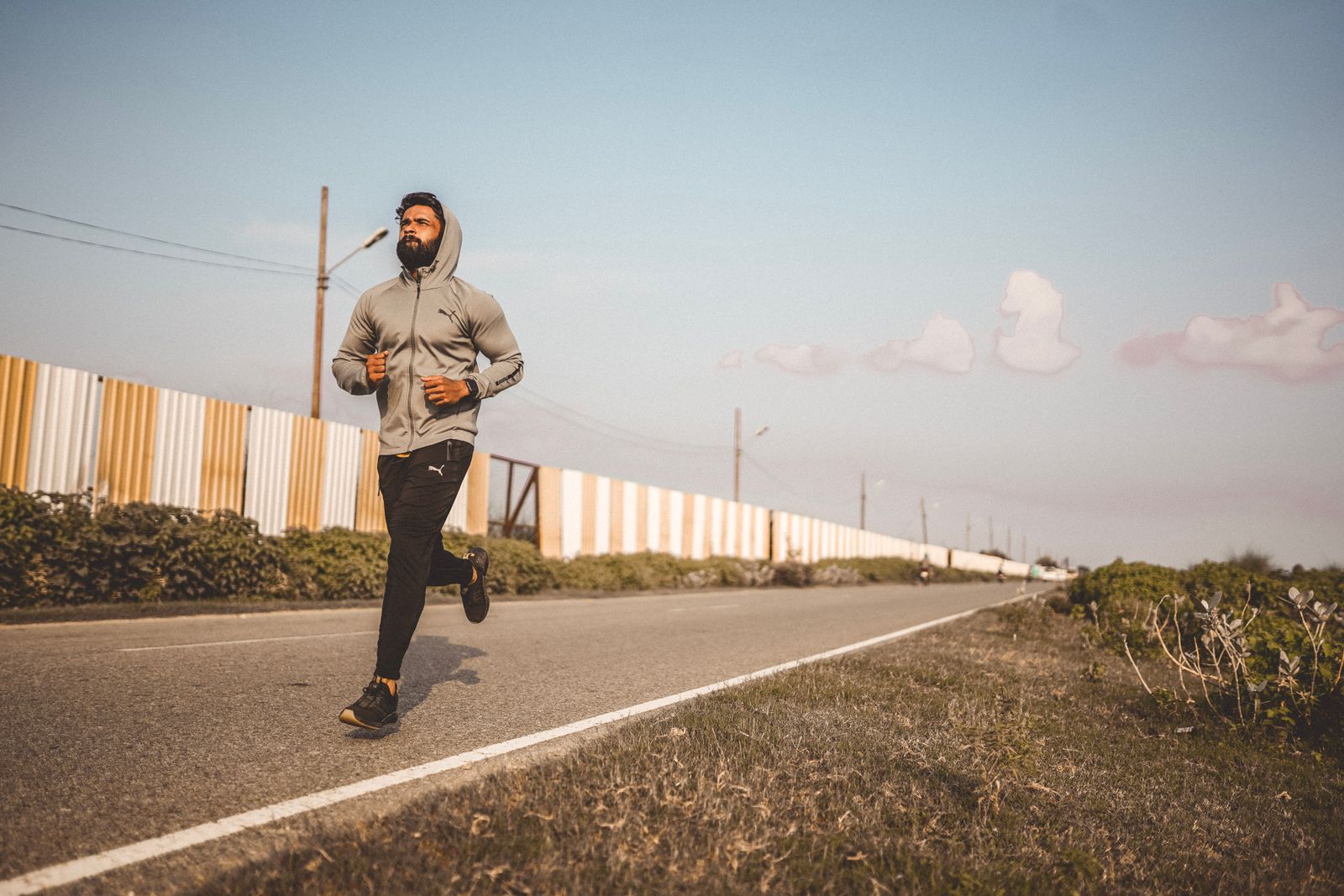
You have never run. Or you have tried three times and given up. You want to finish your first 5K in two months, without getting injured and without quitting in week three. This programme is for you.
It is built on the “walk-run” method, popularised in 1996 by American Josh Clark under the name Couch to 5K. The approach has since been adopted by the UK’s NHS (official programme), by Decathlon Coach, and by the vast majority of running coaches (including Kiprun).
Why does it work? Because it respects the physiology of an untrained body. Your tendons, ligaments and joints need several weeks to adapt to the repeated impact of running. Run 30 minutes straight on day one and you multiply your risk of an overuse injury.
Here is the programme. 3 sessions a week, 8 weeks, one session = 30 minutes maximum. By the end you will be running 30 minutes non-stop, which is roughly 5 km at a beginner’s pace.
CONTENTS
Why 8 weeks (and not 4)?
You will find 4-week plans everywhere, 6-week plans, even 30-day plans. They are not bad plans — they are simply meant for people who already have a sporting base (another regular sport, daily brisk walking, cycling). For a genuine, sedentary beginner they are too aggressive.
Specialists sum it up like this: two mistakes explain most drop-outs and most injuries among beginners — starting too fast, and setting too ambitious a target from day one.
The 8-week programme avoids both traps:
- Controlled progression: running time goes up by 30 seconds to 2 minutes per step, never more
- Walking between every block: it lets muscles and joints recover between two sequences of impact
- At least one rest day between sessions: your body adapts DURING recovery, not during the session
The underlying idea: running develops your cardiovascular system far faster than it strengthens your tendons and ligaments. Walk-run gives those “slow” tissues time to catch up, which limits the overuse injuries typical of beginners (Achilles tendinitis, shin splints, IT band syndrome).
The 4 golden rules before you start
1. Run at conversational pace
This is the rule. If you cannot talk while running, you are going too fast. Slow down. Every time. It is not negotiable, and it applies to the vast majority of runs, even for experienced runners.
For a beginner, conversational pace typically means 7:30 to 9:00 per kilometre. Very slow. That is normal. That is the whole point.
2. Keep your heart rate under control
If you have a heart rate monitor, aim for under 75 % of your maximum heart rate. For a 35-year-old beginner that works out at roughly 139 bpm (simple formula: 220 − age, then 75 %). Stay below it: that is where your base endurance is built.
3. A decent pair of shoes
No shoes, no programme. Your feet absorb hundreds of impacts per kilometre. A proper pair of running shoes (not old casual trainers) prevents most beginner aches and pains.
4. Rest is not optional
You do NOT improve while you run. You improve while you rest after running. At least one rest day between sessions, ideally two for the first four weeks. Monday-Wednesday-Friday, Tuesday-Thursday-Saturday: your call, but never two sessions back to back.
The programme, week by week
Every session starts with 5 minutes of brisk walking as a warm-up and ends with 5 minutes of walking to cool down. The times below cover the effort portion only.
Week 1
3 sessions: 5 × (1 minute running / 2 minutes walking)
Goal: let your body understand what is being asked of it. Think it is too easy? Good. Do not go faster. Really, do not.
Week 2
3 sessions: 5 × (1 min 30 running / 2 min walking)
You are starting to feel your legs. That is normal. If you are still sore beyond 48 hours, repeat the same week before moving on. This is not a speed contest, it is a transformation project.
Week 3
3 sessions: 5 × (2 min running / 1 min 30 walking)
First real milestone: running now lasts longer than walking. Your breathing settles down. You start thinking “I am a runner”.
Week 4
3 sessions: 5 × (3 min running / 1 min 30 walking)
You now run more than you walk. Psychologically that is huge. Hold the conversational pace: speed up here and you pay for it in week 6.
Week 5
3 sessions: 4 × (5 min running / 1 min walking)
The first time you run 5 minutes without stopping. This is the threshold where your body settles into a stable aerobic effort. Have a sip of water before you head out.
Week 6
3 sessions: 3 × (8 min running / 1 min walking)
You are running 24 minutes out of 27. Almost continuous. If two sessions feel easy and one feels hard, that is normal. Listen to your body, not the calendar.
Week 7
3 sessions: 2 × (12 min running / 1 min walking)
Only two blocks left. The finish is close. Mentally, you know you will get there. Change nothing: no new shoes, no untested route, no untested playlist.
Week 8
Session 1: 20 min continuous running + 5 min walking + 5 min running
Session 2: 25 min continuous running
Session 3 = RACE DAY: 30 min continuous running ≈ 5 km!
Welcome to the club. You are not a beginner any more.
The 5 mistakes that make people quit
Cross-referencing what coaches and specialist media report, here are the five recurring mistakes behind most drop-outs.
Mistake 1 — Running too fast “because I feel good”
The worst and the most common. Early enthusiasm pushes you to speed up. Your body has not had time to adapt, your legs burn halfway through, you finish exhausted. The result: you associate running with suffering. You do not go back the following week.
If you finish a session so out of breath that you cannot speak, you went too fast. Your target: finishing able to say “that was a good run” without gasping.
Mistake 2 — Skipping rest days
“I feel fine, I will add a session.” Bad idea. Your tendons and fascia need one to two days to recover from the micro-damage of the previous session. Skip the rest and you are heading for tendinitis by week 4.
Mistake 3 — Trying to keep up with someone faster
You run with a fitter friend, they drag you along at their pace, you blow up. The fix: run separately for the first 8 weeks, or set your own pace and stop when you need to (not when they feel like it).
Mistake 4 — Skipping the warm-up
Five minutes of brisk walking before every session is not optional. It raises your heart rate gradually, primes your muscles and lubricates your joints. Starting cold is how you pick up early injuries.
Mistake 5 — Measuring kilometres only
At the start, ignore distance. Watch the clock. A beginner who completes 30 minutes without suffering improves faster than one who forces the pace to hit 5 km as quickly as possible. Speed arrives on its own over the weeks.
Race day: your first 5K
A few rules so that your first 5K is a success rather than an ordeal.
The day before
- Normal dinner, rich in carbohydrates (pasta, rice, potatoes) — no experiments
- No alcohol
- Early night, proper sleep
- Lay your kit out the night before so you are not hunting for it at the last minute
The morning (for a morning session)
- Light breakfast around 2 hours before: a slice of toast with honey and a banana is enough
- Drink well in the two hours beforehand
- Go easy on strong coffee (stomach acidity)
During
- Warm up with 5 minutes of brisk walking
- First kilometre: slower than usual. Keep something in reserve.
- From km 2 to km 4: steady conversational pace
- Final kilometre: if you feel good, pick it up slightly
- If you cramp: walk for 30 seconds, then set off again
Afterwards
- 5 minutes of easy walking
- Gentle stretching for 5-10 minutes
- Water and carbohydrates within 30 minutes (banana, fruit juice)
- You did it. Remember this moment. It is the start of something.
What comes next?
You can run 5 km. Good. Now what? Three possible directions, depending on what motivates you:
| Goal | Rough timeframe | Approach |
|---|---|---|
| Improve your 5K time | 4-6 weeks | Add short intervals (e.g. 5 × 30 s fast / 30 s slow) |
| Step up to 10K | ~8 weeks | Build up gradually to a long run of about 60 min — see our 8-week beginner 10K plan |
| Enjoyment and base endurance | ongoing | 3 runs a week, 30-45 min, conversational pace |
FAQ — beginner 5K programme
What if I miss a session?
No problem. Pick the programme back up at the next session, at the same level, without catching up. If you miss three sessions in a row, repeat a full week. The worst thing would be to carry on as if nothing had happened: that is a direct injury risk.
I am overweight — is this programme suitable?
Yes, with two adjustments: add one extra week between each step up (so 10-12 weeks instead of 8), and choose shoes with generous cushioning, better suited to impact. If you have any medical concerns, check with your doctor before starting.
How many calories will I burn?
As a rough guide, around 300 to 500 kcal per 30-minute session for a runner weighing 70-80 kg (the figure varies with weight, pace and fitness). Running helps with weight loss, but what you eat decides the outcome: you cannot outrun a poor diet.
Should I run fasted?
No. Running on an empty stomach means risking low blood sugar and a ruined session when you are a beginner. Eat something light 1 to 2 hours before. The “fasted running burns more fat” debate concerns experienced runners in specific training blocks, not people starting out.
Can I run on a treadmill?
Yes, especially in winter or bad weather. Tip: set a 1 to 2 % incline to make up for the lack of air resistance. Otherwise the move outdoors will feel harder than it should.
What is the minimum kit to get started?
Three things: a proper pair of running shoes, a technical t-shirt (not cotton, which soaks up sweat) and shorts or tights that suit you. Everything else (GPS watch, hydration belt, headphones) is optional for the first 8 weeks.
Rain, cold, wind: do we carry on?
Yes (except thunderstorms). In winter, dress as if it were 10 °C warmer than it actually is: you will warm up within minutes. Light rain: cover up and run. Wind: plan your route so the wind is behind you on the way back rather than on the way out.
How long before running actually feels good?
Often 4 to 6 weeks. The very first sessions are hard. After the first month the body adapts, the effort flows better, and many runners start to feel that well-known pleasure of running. That is usually the point where it clicks.